

This mono synth is top tier of sound (&) design
I got the chance to add the Implexus to my studio rig and it's staying. Here's why.

Hey mates,
I just released the deep dive video for the Majella Audio Implexus. In this article I want to share some background information about the instrument and my experience with it without going too much into the technical aspects of the instrument. Here's the video drowned in sound examples:
The first impression I had while checking out the instrument in the place up to the unit: the brushed‑aluminium chassis, the clean‑looking dials, that mix of modern sleekness with a hint of retro. It feels like a piece of hardware you want to put on a table and start turning knobs for the sheer pleasure of it.
Disclaimer and full disclosure: Majella paid me to create a deep dive demonstration of the Implexus. This article is on my own initiative of course. My goal is to share the experience of the synth, not a sales pitch, but of course keep the above in mind.
Design
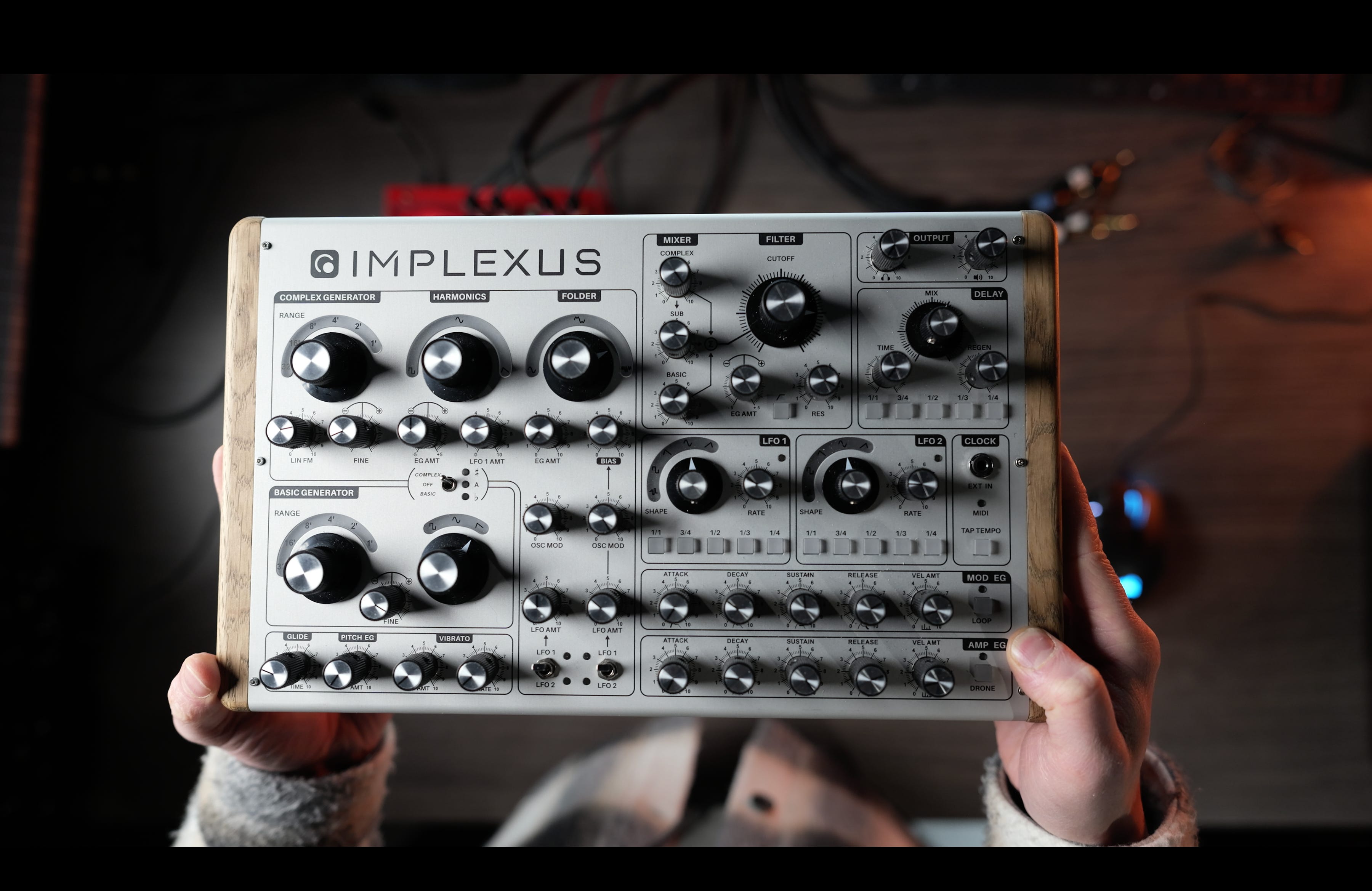
It kind of feels weird to start with the visual aspect of this synth, but it needs to be said. This synthesizer is a beauty to behold. As you can see in the video, the camera loves it. In real life it's just as beautiful and looks and feels like a very high-quality instrument. There's now also a dark version available which looks great as well, but personally I prefer the original look as it really has a unique face.
The hands‑on experience
What I love most about the Implexus is how it's truly a what-you-see-is-what-you-get experience. There are no menus whatsoever that you need to get into while playing it. It's a true one-knob-per-function instrument. Perfect for live performances. Everything is clearly laid out and labeled, with LED's telling you what the modulation is doing to a function.
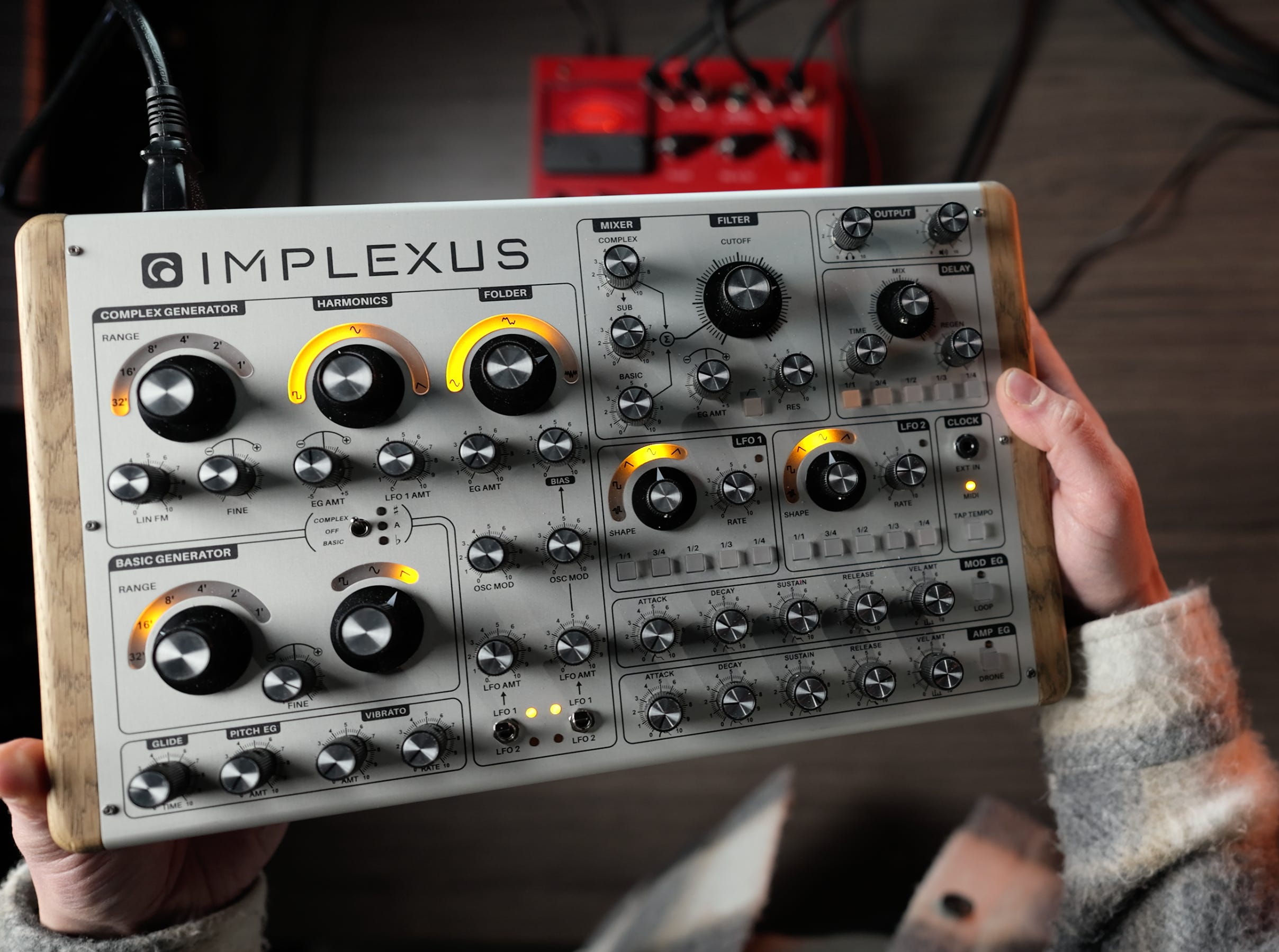
The layout and functionality focusses your attention on the complex oscillator, the beating heart of the instrument. The other sound sources, the basic oscillator and sub oscillator, are there to compliment what you design with the complex oscillator. The The more important aspect of the basic oscillator is to use it as another modulation source. That's not to say it doesn't sound phat, because it really sounds lovely on itself and as a layer to compliment the complex oscillator.
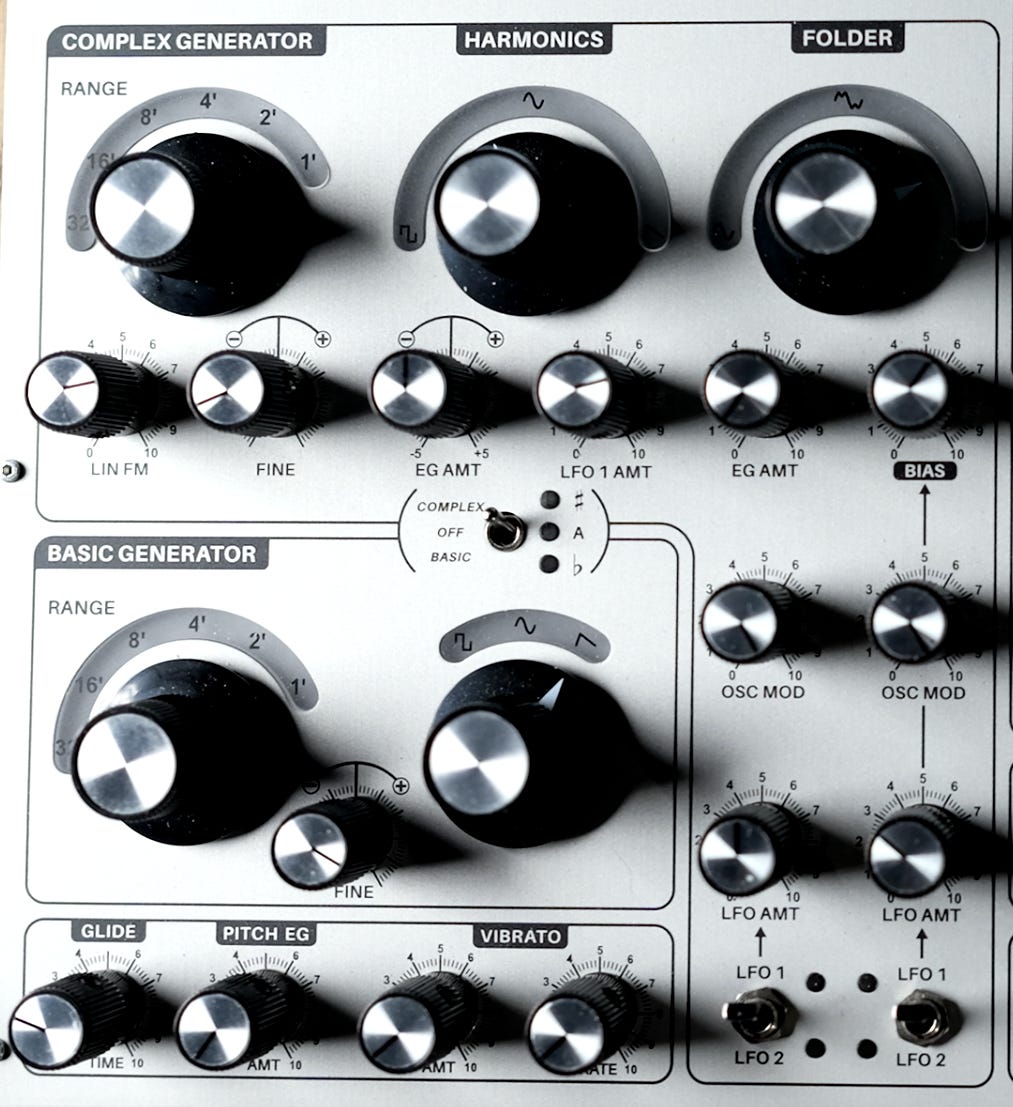
The focus of the filter (which has a beautiful sound to it as well) seems to be mostly to be used to perform with rather than for pure sound design, although it's obviously also very useful for that as well. I do miss a control to route one or both LFO's to the filter cut-off, but I understand choices need to be made in a design. And one can use the CV out of LFO2 to modulate the filter cut-off. Albeit without a level control. You'll need to add a VCA in the path for that. Another thing that is missing is a midi CC to control filter cut-off. There might be a technical limitation why this wasn't possible to implement.
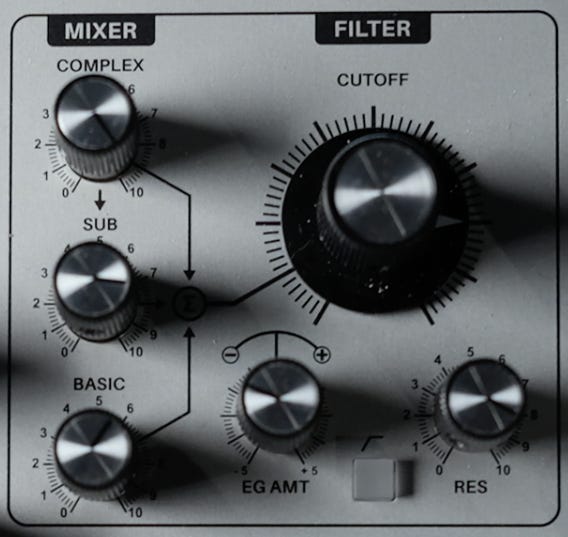
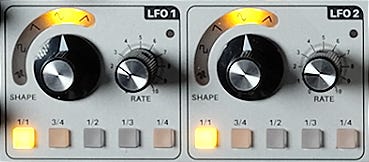
The LFO's all have very hands-on controls and tempo-sync switches to dial in specific rhythmic patches. Especially the envelopes feel really snappy in a very musical way. It would've been nice if there was a way to press two switches to get triplets or dotted sync modes, but once familiair with the response of the knobs, it's not too difficult to dial those in manually.
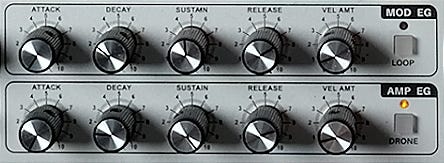
The envelopes surprised me. Majella has told me they are built completely from discrete components which probably explains their musicality. Most (digital) envelopes I've worked with often feel either too clicky or too slow to me. These envelopes feel incredibly musical, fast yet snappy. Short attack values add a certain roundness to the sound that is really lovely and somewhat reminds me of the musical response you'd get from a LP gate. Nice touch by the way to add a ‘Drone’ button, so you can even sit on the couch and drone away.
Bottom line: the Implexus is a joy to play because every knob does something useful, the sound is instantly engaging, and the design nudges you toward creative, on‑the‑fly sound design. It’s not a polished studio monster; it’s a hands‑on instrument that rewards you for turning its knobs and listening to the result. It's a very musical electronic instrument, which might be a bit strange to say since the word ‘instrument’ implies this anyway, but I'm sure you know what I mean.
Meeting Jasper from Majella
A few months ago I grabbed my racing bike and cycled to Majella headquarters to meet Jasper at his workshop. It's only half an hour by bike from my studio. Handy! Walking into the workshop, I was surrounded by a wall of Implexi (logical plural?) ready to be assembled and finished, many boxes, their eurorack units, soldering equipment, and a nice coffee machine, I could instantly feel the love that went into the the instruments they make. Jasper walked me through the whole design process, from sketching the circuit board, through countless prototype revisions, to the final approval stage that lets the synth actually reach the market. The amount of work required to get a synth from concept to a sellable product is staggering, and Jasper’s dedication to high‑quality design and uncompromised sound shines through every step. Knowing all this, the high price point of this mono-synth becomes understandable in my view.
Majella started as a two‑person operation, but today Jasper runs the whole production line himself: sourcing parts, assembling each unit (sometimes with some help), handling repairs, and even doing the final quality checks. Really cool to have such a high quality synth company right around the corner!
Bottom line
The Implexus is a high-quality, no-compromise synth and it shows in its visual design, feel and, most importantly, sound. It rewards you for turning its knobs carefully and listening to the result. This makes it feel like a true instrument that can be learned to play and perform with. It forces you to stay centered on the complex oscillator, with every other module acting as an extension of that core sound source. Minor quirks like the missing filter‑LFO slot, limited midi-implementation, and somewhat limited sync buttons, are easy to forgive because it's otherwise a joy to play. And connecting it to a eurorack modular opens up a whole new level of sound design and control keeping the longevity of this synth at a very good spot indeed.
Overall it’s a joy to play, built with meticulous attention to detail, and backed by a maker who treats each unit like a handcrafted instrument. I can’t wait to see what Majella puts together next.
Cheers,
Dave